 English
 français
 italiano
 Español
 português
 العربية
Jun 07, 2022
Company News

A coffee capsule maker automates the filling, sealing, and discharge of single-serve coffee capsules. It helps coffee roasters, private-label brands, and contract manufacturers maintain consistent fill weights, protect coffee freshness, and increase production capacity.
Selecting suitable equipment requires more than comparing maximum speed. Buyers should consider capsule format, coffee characteristics, sealing materials, automation level, cleaning requirements, and downstream packaging. Representative production trials are essential because capsule dimensions, coffee density, and lid structure can affect actual performance.
Sustainability depends on the capsule material, packaging design, production efficiency, and available recycling or disposal systems.
Manufacturers are increasingly evaluating recyclable aluminum, recyclable plastics, compostable materials, and reduced-weight capsule structures. However, sustainable materials must still provide adequate oxygen and moisture protection.
A coffee capsule production machine should also limit coffee waste, defective seals, and rejected capsules. Accurate dosing and stable sealing can reduce the environmental impact associated with product loss.
Before adopting a new capsule material, manufacturers should test its feeding stability, heat resistance, sealing window, and shelf-life performance.
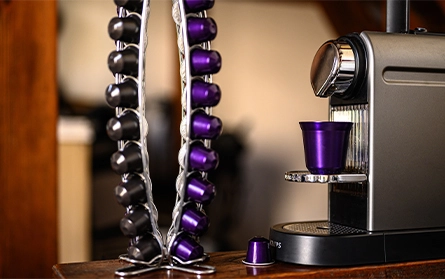
Capsules that appear similar may differ in diameter, height, rim thickness, rigidity, and lid-sealing layer. These differences can affect feeding, positioning, dosing, and sealing.
Nespresso compatible filling machines require tooling designed for the intended compatible capsule dimensions. Buyers should not assume that one machine can process every Nespresso-style capsule without adjustments.
Compatibility testing should confirm:
Capsule feeding and orientation
Coffee dosing accuracy
Rim cleanliness
Lid pickup and placement
Sealing temperature and pressure
Leakage resistance
Finished-capsule discharge
A Nespresso capsule filling machine should be tested with the actual capsules, lids, and coffee planned for commercial production.
The investment should be evaluated through total production cost rather than equipment price alone.
Important cost factors include:
Filling speed and number of lanes
Labor requirements
Coffee and capsule waste
Changeover time
Cleaning and maintenance
Nitrogen-flushing equipment
Inspection and rejection systems
Spare parts and technical support
Secondary packaging requirements
An automatic coffee filling machine may require a higher initial investment, but it can reduce manual handling and lower labor cost per capsule at sufficient production volumes.
Small producers should compare expected annual demand with machine capacity. Oversized equipment may create unnecessary capital and maintenance costs.
The machine does not determine coffee flavor by itself, but filling consistency and sealing quality strongly influence the final brewing experience.
A reliable coffee capsules filling machine should maintain:
Stable coffee weight
Consistent tamping or product distribution
Clean capsule rims
Accurate lid placement
Reliable seal strength
Low oxygen exposure
Minimal capsule deformation
Coffee grind size, bulk density, moisture, and oil content affect dosing behavior. Excessively fine or oily coffee may flow poorly and accumulate around the dosing system.
Nitrogen flushing may be used to reduce oxygen inside the capsule, but its effectiveness should be verified through product testing and shelf-life studies.
Capsule systems allow brands to offer espresso blends, single-origin coffee, flavored coffee, decaffeinated products, and different roast levels in a convenient format.
A coffee powder capsule filling machine must handle the physical characteristics of each formulation. Dark-roasted or flavored coffee may contain more surface oil, while fine espresso grinds may require different dosing settings from coarser blends.
When changing flavors, manufacturers should consider:
Hopper and dosing-system cleaning
Allergen or flavor carryover risks
Recipe-specific fill weights
Coffee density differences
Changeover time
Packaging identification
Equipment recipe storage can help operators reproduce filling settings for frequently manufactured products.
Modern capsule equipment often uses touchscreen controls, stored recipes, automatic fault alarms, and simplified parameter adjustment.
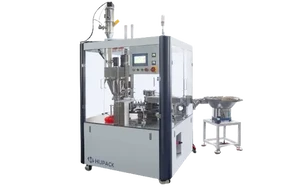
A coffee capsule filling and sealing machine may automate capsule loading, coffee dosing, rim cleaning, lid placement, sealing, rejection, and discharge. This reduces repetitive work and supports more consistent production.
However, buyers should assess operator involvement during:
Coffee and capsule loading
Lid replenishment
Product changeovers
Cleaning
Fault recovery
Material replacement
End-of-batch handling
A machine is not truly convenient if routine changeovers require extensive disassembly or specialized tools.
Coffee dust and oils can collect around hoppers, augers, capsule guides, vacuum systems, and sealing stations. Regular cleaning helps prevent dosing variation, capsule jams, and weak seals.
Daily tasks may include:
Removing residual coffee
Cleaning product-contact parts
Inspecting capsule tracks
Cleaning sealing surfaces
Checking lid pickup systems
Cleaning sensors
A coffee pod sealing machine also requires periodic inspection of heaters, sealing heads, temperature controls, and pressure systems.
Manufacturers should maintain cleaning records and keep critical spare parts available. The supplier should provide maintenance instructions, recommended service intervals, and a spare-parts list.
Consumers increasingly expect convenience, consistent flavor, and a wider choice of coffee styles. At the same time, demand is growing for recyclable or lower-impact capsule materials.
Private-label production is also expanding, encouraging coffee brands to seek flexible equipment that supports smaller batches and frequent recipe changes.
A Nespresso coffee capsule filling machine can help manufacturers enter compatible capsule markets, but success also depends on coffee quality, package design, retail positioning, and reliable capsule sourcing.
Manufacturers should select machinery based on realistic sales forecasts rather than short-term market attention.
Single-use capsules create concerns related to material consumption, mixed-material structures, and collection systems. Environmental performance varies depending on capsule design and local waste-management infrastructure.
Manufacturers can reduce impact by:
Selecting recyclable or compostable materials where practical
Reducing capsule and lid weight
Improving dosing accuracy
Minimizing startup waste
Preventing defective seals
Providing clear disposal instructions
Evaluating reusable or bulk alternatives for selected markets
A coffee capsule packing machine should also use appropriately sized secondary packaging and minimize unnecessary film or carton material.
Environmental claims should be supported by relevant testing and local disposal conditions rather than packaging appearance alone.
Modern capsule production systems increasingly use servo controls, automatic weighing, vision inspection, recipe storage, and real-time production monitoring.
A coffee capsule filling sealing machine may include automatic rejection for missing capsules, inaccurate lids, or sealing defects. Other developments include improved nitrogen flushing, quick-change tooling, remote diagnostics, and better dust control.
A Nespresso pod filling machine may also be integrated with capsule feeding, coding, conveying, and cartoning equipment to create a more continuous production line.
Future developments are likely to focus on:
Faster format changes
Greater material compatibility
Improved quality inspection
Lower energy consumption
Better production data
Support for recyclable and compostable capsules
Selecting a suitable coffee capsule maker requires careful evaluation of capsule dimensions, coffee properties, sealing materials, target capacity, cleaning, maintenance, and secondary packaging.
Manufacturers should test actual capsules, lids, and coffee before approving a machine. Whether selecting a coffee pod filling and sealing machine, a Nespresso filling machine, or a multi-format capsule line, clear specifications and representative trials help confirm filling accuracy, seal quality, and stable production performance.