 English
 français
 italiano
 Español
 português
 العربية



Dec 01, 2023
Blog

For coffee manufacturers, the decision involves more than comparing machine speed or dimensions. The number of capsules per carton, product feeding method, carton opening size, and compatibility with upstream filling and sealing equipment all affect the final result. This guide compares horizontal and vertical cartoning machines, explains their working principles, and provides practical selection criteria for coffee producers and other packaging manufacturers.
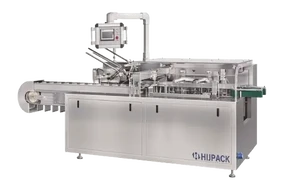
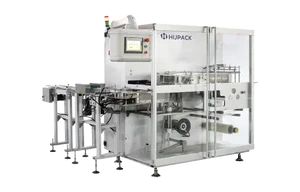
A horizontal cartoning machine is an automatic packaging system that forms paperboard cartons, inserts products through an open side or end, and closes the cartons before discharging finished packages. During operation, cartons generally travel horizontally along a conveyor or indexing mechanism.
A typical horizontal cartoning process includes several stages:
Carton feeding: Flat carton blanks are stored in a magazine and picked up individually.
Carton opening: The machine opens and forms each blank into the required carton shape.
Product feeding: Products are delivered to the loading station through a conveyor, feeder, or manual loading arrangement.
Product insertion: A mechanical pusher or another feeding mechanism moves the product into the open carton.
Carton closing: The carton flaps are folded and secured using tuck-in closures or an appropriate adhesive system.
Finished package discharge: Completed cartons move to the next packaging or inspection stage.
Horizontal cartoners are commonly suitable for products that can be controlled and inserted from the side without losing their required orientation. Examples include blister packs, tubes, sachets, pouches, and grouped consumer products.
Coffee capsules can also be packaged using horizontal cartoning equipment when the capsule feeding and arrangement systems are designed for the required carton format. For example, the HIJPACK WZTS-130 is specifically presented as a Nespresso coffee capsule horizontal cartoning machine.
One advantage of this arrangement is that products can be guided into cartons along a controlled feeding path. This is useful when several capsules must be arranged in a defined pattern before insertion.
For coffee manufacturers evaluating a horizontal cartoning machine, the key considerations include capsule dimensions, the number of capsules per carton, carton opening size, and the required feeding configuration.
For a broader technical explanation of cartoning machine types, Videojet's cartoning machine overview explains the differences between horizontal and vertical carton handling and their typical packaging applications.
A vertical cartoning machine is designed to load products into cartons through an open top while the carton is held in an upright position. Depending on the product and machine configuration, loading may be performed manually or through automatic feeding, counting, lifting, or pick-and-place mechanisms.
A typical vertical cartoning process involves:
Carton blank feeding: Flat carton blanks are picked from a magazine.
Vertical carton forming: The blank is opened and positioned upright with its top accessible.
Product preparation: Products are counted, grouped, or positioned for loading.
Top loading: Products enter the carton through its open top using the configured feeding system.
Carton closing: The top flaps are folded and secured according to the carton design.
Package discharge: Finished cartons are transferred for inspection or further packaging.
Vertical cartoners are frequently considered for products such as bottles, tubes, pouches, and other items that can be placed into cartons from above. They can also be useful when the product arrangement is easier to control through a top-loading process.
The HIJPACK WZTS-120 is one example of this equipment type. Its product information identifies bottles, tubes, pouches, and similar products as potential applications. The machine is designed around an upright carton-loading arrangement.
For manufacturers considering a vertical cartoning machine, it is important to confirm that the product can enter the carton reliably without tipping, jamming, or damaging the package.
Vertical loading does not necessarily mean that products must fall freely under gravity. Depending on the application, mechanical feeders, counting systems, or robotic placement can be used to control product movement.
This distinction is particularly important for small products or grouped items that need a specific arrangement inside the carton. The feeding mechanism should be evaluated as part of the complete machine configuration rather than treated as an optional detail.
The main difference between horizontal and vertical cartoners is their product-loading direction. However, buyers should also compare product stability, carton geometry, feeding requirements, operating speed, changeover procedures, and installation space.
| Comparison Factor | Horizontal Cartoner | Vertical Cartoner |
|---|---|---|
| Product loading | Through the side or end of the carton | Through the open top of the carton |
| Carton position | Generally horizontal | Generally upright |
| Product handling | Often uses controlled pushing or guided insertion | Uses top feeding, placement, or suitable transfer mechanisms |
| Typical applications | Blister packs, tubes, pouches, grouped products, coffee capsules | Bottles, tubes, pouches, counted or top-loaded products |
| Product orientation | Useful when controlled orientation is required | Useful when top access supports the required arrangement |
| Feeding considerations | Infeed alignment and insertion timing | Product positioning and stable top loading |
| Space requirements | Depends on conveyor length and infeed layout | Depends on machine height, feeding system, and access requirements |
| Selection priority | Product control and side-loading compatibility | Top-loading compatibility and product stability |
The following HIJPACK models provide practical examples of how machine configurations and specifications can differ.
| Model | Loading Type | Published Speed | Machine Dimensions |
|---|---|---|---|
| WZTS-130 | Horizontal | 5–30 cartons/min | 3100 × 1100 × 1550 mm |
| WZTS-120 | Vertical | 30–100 cartons/min | 1200 × 900 × 1700 mm |
| WZTS-60 | Vertical opening | 10–30 boxes/min | 3700 × 1650 × 1900 mm |
These are manufacturer-published specifications for individual models, not a controlled comparison of horizontal and vertical technology. The machines have different product applications and carton size ranges, so their rated speeds should not be interpreted as proof that one loading orientation is universally faster.
The dimensions also illustrate why buyers should not assume that every vertical cartoner occupies less space. The WZTS-120 has a smaller listed machine envelope than the WZTS-130, while the WZTS-60 vertical-opening model has a larger listed envelope. Actual installation space must also include conveyors, feeders, operator access, maintenance clearance, and utility connections.
When evaluating an automatic cartoning machine, buyers should compare the complete technical configuration rather than relying on the machine category alone.
For another practical perspective, Packaging World's overview of cartoning equipment illustrates different carton-loading technologies and their applications in food, beverage, and consumer goods packaging.
Horizontal cartoning is generally a suitable option when products can be reliably guided into cartons from the side or end and need to maintain a controlled orientation during insertion.
It may be the better choice under the following conditions:
1. Products need controlled positioning.
Products such as blister cards, tubes, and grouped coffee capsules may require a specific orientation before entering the carton. A horizontal feeding system can use guides, conveyors, pushers, or other mechanisms to maintain the required position during insertion.
2. The carton design supports side loading.
Some carton designs have an opening that is particularly suitable for lateral insertion. The product dimensions, carton opening, internal clearance, and flap structure should be checked together to ensure that products can enter without catching or deforming the carton.
3. Products are packaged in controlled groups.
When several individual products must be arranged in a specific sequence or configuration, horizontal cartoning can support a coordinated feeding and insertion process. This can be useful for coffee capsules packed in predefined retail carton quantities.
4. The machine needs to connect with an existing production line.
Horizontal cartoners can be integrated with upstream filling and sealing equipment through conveyors and synchronized feeding systems. Before selecting a machine, manufacturers should verify product transfer height, conveyor direction, production speed, and available installation space.
The HIJPACK WZTS-130 is a relevant example for coffee manufacturers that require a dedicated horizontal coffee capsule cartoning solution. Its published speed is 5–30 cartons per minute, with carton dimensions ranging from 100 × 30 × 25 mm to 185 × 70 × 45 mm.
These specifications provide an initial reference, but the actual configuration should be confirmed using the customer's capsule samples, carton drawings, and required production speed.
Vertical cartoning can be a better option when products are designed to enter cartons from above, particularly when upright loading, top access, or a specific product feeding arrangement makes the process more practical.
Consider a vertical cartoner in the following situations:
1. Products are suitable for top loading.
Bottles, tubes, pouches, and other products that can be positioned above an open carton may be suitable for vertical loading. Depending on the product, feeding may use gravity, a mechanical transfer system, a counting mechanism, or automated placement.
2. Product arrangement is easier from above.
Some products are difficult to push horizontally without tipping, shifting, or damaging their packaging. A top-loading configuration may provide a more practical transfer path, particularly when products can be counted or grouped before insertion.
3. The production layout benefits from an upright carton position.
A vertical design may help organize certain packaging operations within a specific factory layout. However, the complete machine envelope, feeding system, access points, and maintenance requirements must be considered before concluding that it will save space.
4. The packaging application requires a dedicated top-opening solution.
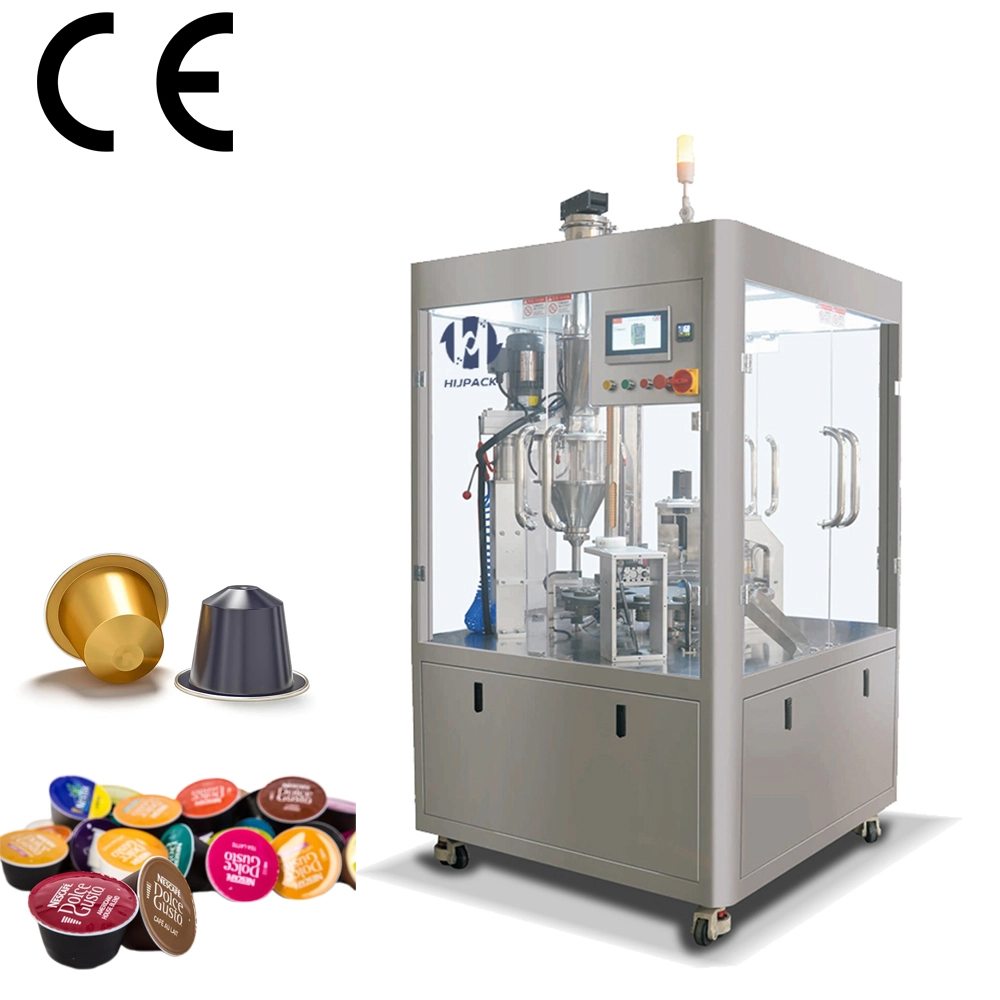
For example, HIJPACK also lists the WZTS-60 Nespresso K-Cup top-opening cartoning machine. Its product information identifies coffee capsules, bottles, tubes, and bagged products as possible applications. This shows that vertical-opening technology can also be configured for selected coffee capsule packaging applications.
Manufacturers should distinguish between the general WZTS-120 vertical cartoner and the WZTS-60 top-opening coffee capsule solution. Their product applications and machine dimensions are different, and one model should not automatically be assumed to have the capabilities of the other.
Before making a decision, review the complete production process, including product feeding, carton opening, closing method, and downstream handling. Packaging World's cartoning equipment selection guidance also emphasizes matching machinery to product characteristics, materials, plant conditions, and future packaging requirements.
Yes, both horizontal and vertical-opening cartoning systems can be configured for selected coffee capsule applications. However, compatibility depends on capsule dimensions, the number of capsules per carton, the feeding arrangement, and the carton opening design. HIJPACK lists the WZTS-130 as a horizontal coffee capsule cartoner and the WZTS-60 as a vertical-opening Nespresso K-Cup cartoner. Manufacturers should confirm the exact configuration through product and carton sample testing.
No. Although some vertical cartoners have compact machine bodies, total space requirements depend on the equipment model, product feeding system, conveyors, operator access, and maintenance clearances. A vertical machine may also require additional height for product feeding. Buyers should compare complete layout drawings rather than assuming that loading orientation determines the required floor area.
Prepare representative product samples, empty carton blanks, dimensioned carton drawings, and details of the required packaging quantity. For coffee capsule applications, also provide capsule dimensions, the number of capsules per carton, and the intended arrangement. If leaflets or inserts are required, include their dimensions, paper weight, and folding specifications. These materials allow the supplier to evaluate feeding compatibility, insertion stability, carton closing, and actual production performance.
Horizontal and vertical cartoning machines both automate secondary packaging, but their different loading orientations make them suitable for different product and carton configurations. Horizontal cartoners are useful when products need controlled side insertion and stable positioning. Vertical cartoners are often appropriate when products can be loaded through an open carton top using a suitable feeding system.
Before selecting equipment, manufacturers should evaluate the following:
Product shape, dimensions, stability, and required orientation.
Carton dimensions, opening size, material, and closing method.
Number of products per carton and product feeding requirements.
Required cartons per minute and actual production conditions.
Available factory space, conveyor connections, and maintenance access.
Format changeover requirements and future production plans.
Sample testing and verification of finished carton quality.
The most suitable cartoning machine is not necessarily the fastest or smallest model. It is the one that can consistently package the intended product in the required carton format while fitting the production line and operating requirements.
By evaluating actual product samples, carton specifications, and production targets before purchasing equipment, manufacturers can reduce selection risks and build a more reliable automated packaging process.